
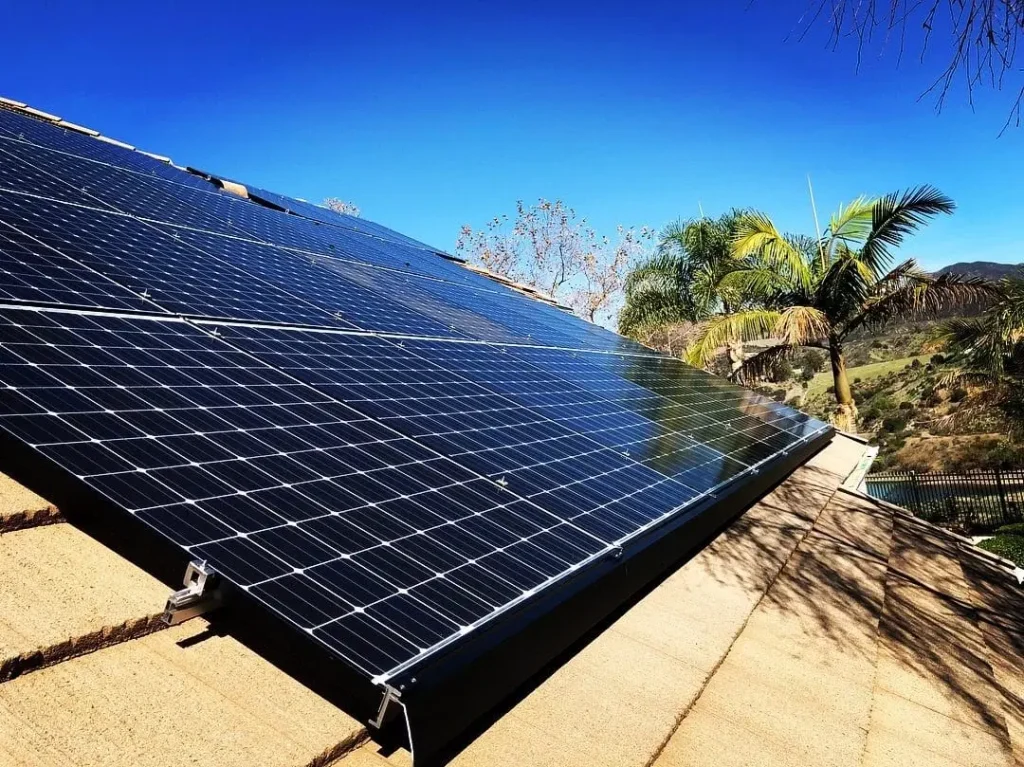
Solar panels cost roughly $2.50 to $3.50 per watt installed in Los Angeles in 2026. That puts a typical 8 kW system at about $20,000 to $28,000 before financing, before battery storage, and before any adders your specific home requires.
One number matters more than the total: price per watt. It is the only way to compare quotes fairly, because it normalizes for system size. A 12,000 dollar quote and a 26,000 dollar quote can represent identical value if the systems are different sizes.
Before you go further, one correction you will not find on most pricing pages. The 30 percent federal tax credit is gone. Section 25D expired on December 31, 2025 and a purchase made in 2026 receives no federal residential credit. Many cost calculators online still subtract 30 percent from their figures. If a quote or a website shows you a net price after federal credit, the math is wrong.
Solar Panel Cost by System Size in Los Angeles
| System size | Typical Los Angeles fit | Estimated installed cost |
| 5 kW | Smaller home, modest usage, limited AC | $12,500 to $17,500 |
| 6 kW | Average home with moderate cooling load | $15,000 to $21,000 |
| 8 kW | Typical single family home | $20,000 to $28,000 |
| 10 kW | Larger home with central air | $25,000 to $35,000 |
| 12 kW | High usage, pool, or EV charging | $30,000 to $42,000 |
| 14 kW | Large or all electric home | $35,000 to $49,000 |
These are market estimates, not quotes. Your figure depends on your roof, your electrical service and your usage.
Where the Money Actually Goes
Homeowners often assume most of the cost is panels. It is not.
| Component | Share of a typical project |
| Solar panels | 30 to 40 percent |
| Inverters or microinverters | 10 to 15 percent |
| Racking and mounting hardware | 5 to 10 percent |
| Labor and installation | 20 to 30 percent |
| Permits, plan review and inspection | 3 to 5 percent |
| Electrical work and interconnection | Varies widely |
| Design, engineering and utility paperwork | Included in most quotes |
The equipment is roughly half. The rest is the work of putting it on your house legally and safely, which is where quality differences between installers actually show up.
The Los Angeles Adders That Move a Quote
This is where local pricing separates from national averages, and where two quotes on the same street can differ by thousands of dollars for legitimate reasons.
Roof type. Los Angeles has a large stock of Spanish and concrete tile roofs. Tile takes longer to work on, requires different attachment and flashing methods, and carries more risk of breakage. Tile adds meaningfully to labor. Flat and torch down roofs need ballasted or specialized mounting and carry their own considerations.
Roof age and condition. If your roof has under about ten years of service life remaining, the sensible sequence is roof first, panels second. Removing and reinstalling an array later costs real money. An honest installer raises this before the contract, not after.
Electrical panel. A large share of LA housing predates 1980, and 100 amp service with a full panel is common. Adding solar, and especially adding solar plus a battery or an EV charger, may require a main panel upgrade, a subpanel or load management. A main panel upgrade commonly runs $2,000 to $4,500 and should appear as a separate line item rather than buried in the system price.
Permitting jurisdiction. Inside the city, plan review runs through LADBS. Los Angeles County contains dozens of separate building departments, each with its own fees, review times and requirements. The jurisdiction affects both cost and timeline.
Roof complexity. Multiple planes, dormers, steep pitch, limited access, second and third story work and obstructions all increase labor.
Shading and layout. Heavy shading may call for microinverters or optimizers rather than a string inverter, which changes equipment cost.
HOA and historic overlays. Some neighborhoods add review steps. These rarely block a project but can add time.
What Is Usually Not in the Headline Number
Read any quote for what it excludes.
Battery storage is a separate project and a separate cost. Main panel upgrades. Roof repair or replacement. Trenching for a detached garage or ADU. Tree trimming. EV charger installation. Any structural reinforcement a plan check requires.
A quote that looks lower than everyone else’s is often lower because these items sit outside it and arrive later as change orders.
How to Compare Quotes Properly
Convert everything to price per watt. Total price divided by system size in watts. Now the quotes are comparable.
Check the equipment, not the brand slogan. Panel model and wattage, inverter or microinverter model, racking manufacturer. Datasheets should be provided. A quote that will not name the equipment is not a quote.
Look for dealer fees. Many solar loans carry a dealer fee of 15 to 30 percent, which the lender charges the installer and the installer builds into the system price. You will rarely see it on a line. The tell is a cash price that is substantially lower than the financed price for the same system. Ask directly what the cash price is.
Compare production estimates, not just cost. A cheaper system that produces less is not cheaper per kWh delivered. Ask for estimated annual production in kWh and the assumptions behind it.
Confirm what the warranty covers. Panel, inverter, workmanship and roof penetrations are separate warranties from separate parties with different terms. A single headline number covering all of them is a simplification worth questioning.
Verify the license. Check the contractor’s CSLB license number and status. Green Additions holds CSLB #1127392.
Cost Is Not the Same as Value
Two Los Angeles homeowners can pay the same price for the same system and get very different results, because their utilities treat solar differently.
LADWP customers are served by a municipally owned utility that is not regulated by the CPUC and is not on the Net Billing Tariff. LADWP runs its own net metering program that credits exports at or near full retail rates.
SCE customers are on the Net Billing Tariff. Exported power earns a fraction of the retail rate, so savings depend heavily on using your own production directly or storing it for the evening peak.
This is the single most important thing to establish before you evaluate a proposal, and it is why a payback figure copied from a national article is close to meaningless here. Our guide to understanding NEM 3.0 covers the distinction in detail.
Does Solar Still Pay Off Without the Federal Credit?
For many Los Angeles homeowners, yes, though the timeline is longer than it was in 2025.
Two things work in solar’s favour. Retail electricity rates keep climbing, with SCE averaging near 35 cents per kWh and summer peak pricing between 4 p.m. and 9 p.m. reaching considerably higher. And hardware pricing has continued to come down, which partially offsets the loss of the credit.
Two things work against it. The credit is gone, and export compensation under net billing is low. The honest answer is that solar in 2026 rewards accurate design far more than it used to. A system sized to your actual consumption pattern performs well. A system sized to maximize exports does not.
Frequently Asked Questions
How much do solar panels cost in Los Angeles in 2026?
About $2.50 to $3.50 per watt installed. A typical 8 kW system runs roughly $20,000 to $28,000 before storage, financing or site specific adders.
Is there still a 30 percent federal tax credit for solar?
No. Section 25D expired December 31, 2025. Purchases made in 2026 with cash or a loan receive no federal residential credit. Any pricing page still applying 30 percent is out of date.
What size solar system does a Los Angeles home need?
It depends on annual kWh consumption, not square footage. Pull twelve months of usage from your utility account. Homes with central air, a pool or an EV typically need larger systems than the local average.
Why are solar quotes in Los Angeles so different from each other?
Roof type, electrical panel condition, permitting jurisdiction, equipment selection, whether financing fees are embedded, and what each quote excludes. Converting to price per watt removes most of the confusion.
Does a tile roof cost more for solar?
Yes. Tile requires different attachment and flashing methods, takes longer, and carries breakage risk. Expect it to increase labor compared with composition shingle.
Do I need a new electrical panel for solar?
Sometimes. Older homes with 100 amp service frequently do, particularly when a battery or EV charger is part of the plan. A load calculation determines it.
How long does a solar installation take in Los Angeles?
The physical installation is usually one to several days. The full process including design, permitting, inspection and utility approval commonly takes several weeks or longer, depending on the jurisdiction and the utility.
Should I include a battery?
Under net billing it often improves the result. Under LADWP net metering the case rests more on outage protection. See our guide to home battery costs.
Get a Real Number for Your Roof
Market ranges are a starting point. The only figure that matters is the one built from your roof, your panel, your usage and your utility. Green Additions provides itemized proposals that show what is included and what is not.

