
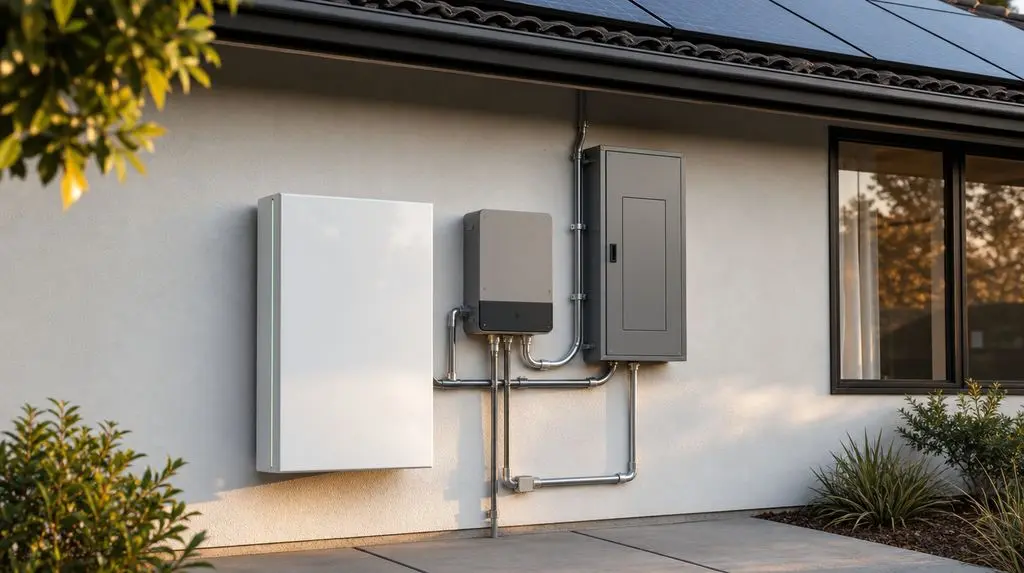
Green Additions helps homeowners get more value from their existing solar investments. If you already have solar panels installed, you might wonder whether you can add a Tesla Powerwall without replacing your entire system. The good news is that, in many cases, you can.
Adding a home battery allows you to store excess solar electricity during the day and use it when your panels are not producing enough power. It can also provide backup electricity during grid outages, depending on your system configuration.
However, compatibility, electrical equipment, available space, and utility requirements all matter. Before investing in battery storage, it is important to understand how a Tesla Powerwall works with an existing solar installation.
1. Can You Add a Tesla Powerwall to Existing Solar Panels?
Yes! Tesla Powerwall can be integrated with many existing residential solar systems. You generally do not need to remove your current solar panels or start your installation from scratch.
Tesla offers battery solutions that can work with existing solar installations, including systems using third-party solar inverters. Powerwall 3 also supports AC-coupled configurations with compatible existing solar equipment.
Before installation, a qualified installer should evaluate your existing equipment, including:
- Solar inverter brand and model.
- Solar panel system capacity.
- Main electrical service panel.
- Existing backup or transfer equipment.
- Available installation space.
- Household electricity consumption.
This assessment helps determine which Powerwall configuration is appropriate for your home.
2. How Does a Tesla Powerwall Work With Existing Solar Panels?
Your solar panels generate electricity during daylight hours. Your home uses some of that electricity immediately, while excess production can be stored in your Powerwall.
The stored electricity becomes available when your home needs additional energy, such as during the evening, overnight, or a power outage.
Here is how the system typically works:
- Daytime: Solar panels generate electricity to power household appliances.
- Battery charging: Excess solar production charges the Tesla Powerwall.
- Evening: The battery supplies stored electricity when solar production decreases.
- Grid outage: The system disconnects from the utility grid and supplies designated backup loads.
This arrangement helps increase solar self-consumption and reduce dependence on grid electricity. Actual savings depend on your electricity rates, household usage, battery settings, and utility compensation rules. Tesla Support
3. Is Your Existing Solar Inverter Compatible?
One of the most important considerations is your current solar inverter.
Solar panels produce direct current (DC) electricity, which must be converted into alternating current (AC) for household use. Your existing inverter performs this function.
When adding a Powerwall, the installer must determine how the battery will communicate with your solar equipment.
Two common configurations are:
AC-coupled installation
In an AC-coupled system, your existing solar inverter remains in place. The Powerwall connects to the home’s AC electrical system and stores available excess electricity.
This is a common retrofit approach because it can allow homeowners to retain their existing solar equipment.
DC-coupled installation
In a DC-coupled configuration, solar electricity connects directly to the Powerwall’s integrated inverter rather than passing through a separate solar inverter first.
Powerwall 3 supports both AC-coupled and DC-coupled solar configurations, subject to equipment compatibility and system-design requirements. Tesla generally prefers DC coupling for efficiency and reduced equipment requirements.
Your installer can recommend the appropriate configuration after inspecting your existing system.
4. How Much Does It Cost to Add a Tesla Powerwall?
The cost of adding a Tesla Powerwall depends on your home’s electrical setup and installation requirements.
Some installations are relatively straightforward, while others require additional electrical work.
Factors affecting the total cost include:
- Tesla Powerwall model and quantity.
- Existing inverter compatibility.
- Backup Gateway or other required control equipment.
- Electrical panel modifications.
- Wiring, conduit, and labor.
- Permits and utility approval.
- Whole-home versus partial-home backup configuration.
If your existing solar system requires significant electrical modifications, the installation cost may increase.
For an accurate estimate, request an assessment based on your current solar equipment, electricity usage, and backup requirements rather than relying on a generic online price.
5. Can a Tesla Powerwall Provide Backup During Power Outages?
Yes. One of the biggest advantages of adding battery storage is having backup electricity when the utility grid goes down.
With the appropriate backup configuration, your Powerwall can automatically disconnect your home from the grid and supply electricity to designated circuits.
Depending on your system design and available battery capacity, you may be able to operate:
- Refrigerators and freezers.
- Lighting and essential outlets.
- Internet routers.
- Home office equipment.
- Selected HVAC equipment.
- Other essential household appliances.
However, not every appliance can necessarily operate simultaneously. High-power equipment, such as central air conditioning and electric vehicle chargers, requires careful planning.
A qualified installer should calculate your home’s electrical demand to determine whether one battery is sufficient or multiple units are needed.
6. Will Adding a Powerwall Affect Your Existing Solar System?
In most properly designed retrofit installations, adding a Powerwall does not require replacing your existing solar panels.
However, changes to your electrical configuration may be necessary to integrate the battery safely.
If you are a California homeowner, it is particularly important to review your existing utility agreement before making changes.
For example, homeowners enrolled in older Net Energy Metering (NEM) programs should ask their installer whether the proposed battery addition affects their existing tariff status or utility interconnection agreement.
Adding battery storage and modifying an approved solar system are not necessarily treated the same way. Confirm the applicable requirements with your installer and utility before proceeding.
7. Is Adding a Tesla Powerwall Worth It?
For many homeowners, adding a Tesla Powerwall can make an existing solar investment more useful.
Here are some potential benefits:
- Greater energy independence: Store excess solar electricity for later use.
- Backup protection: Maintain power to selected household circuits during outages.
- Better solar utilization: Use more of the electricity your panels generate.
- Energy management: Monitor battery operation and household energy consumption through the Tesla app.
- EV charging support: Use stored household energy to supply an electric vehicle through your electrical system.
However, the financial benefits depend on your electricity rates, utility export compensation, battery installation costs, and daily energy consumption.
If your utility offers limited compensation for excess solar electricity, storing that energy for later household use may be particularly attractive.
8. Why Choose a Professional Solar Battery Installer?
Adding a battery to an existing solar installation requires more than simply connecting additional equipment.
The installer must understand inverter compatibility, electrical loads, backup configurations, local permitting, and utility interconnection requirements.
An experienced installer can evaluate your existing solar system and recommend a battery configuration that meets your energy goals without unnecessary equipment replacements.
At Green Additions, homeowners can explore customized solar and battery storage solutions designed around their existing equipment, household electricity consumption, and backup power requirements.
Whether you want to reduce electricity expenses, improve energy independence, or prepare for unexpected outages, a professional system assessment is the right starting point.
Frequently Asked Questions (FAQs)
1. Can I add a Tesla Powerwall without replacing my solar panels?
Yes. Many existing solar installations can accommodate a Tesla Powerwall without replacing the solar panels. Compatibility depends on your inverter, electrical configuration, and the proposed battery design.
2. Can I install a Tesla Powerwall with a non-Tesla solar inverter?
Yes. Tesla Powerwall 3 supports compatible third-party solar inverter configurations, including AC-coupled installations. Your installer must verify the specific equipment and system requirements.
3. How many Tesla Powerwalls do I need for my home?
The number depends on your electricity consumption, essential appliances, backup expectations, and desired operating time. A home requiring whole-house backup may need more battery capacity than one backing up essential circuits.
4. Can my existing solar panels charge a Tesla Powerwall?
Yes. When properly configured, your existing solar panels can charge the Powerwall using excess electricity generated during the day.
5. Will my solar panels work during a power outage after installing a Powerwall?
Yes, with a compatible backup configuration. The system can operate independently of the utility grid during an outage and use available solar production to supply household loads and recharge the battery, subject to system design and operating conditions.
6. Does adding a Tesla Powerwall affect California NEM 2.0?
Adding battery storage does not automatically mean losing NEM 2.0. However, changes to your approved system design and utility interconnection requirements must be reviewed before installation. Ask your installer to verify your specific situation.
7. Is Tesla Powerwall compatible with every existing solar system?
No. Although Powerwall supports many existing solar inverter configurations, compatibility depends on the equipment, system capacity, backup configuration, and applicable installation requirements.
Final Thoughts
Adding a Tesla Powerwall to your existing solar system can be a practical way to improve energy storage, increase solar self-consumption, and gain backup protection during power outages. You may not need to replace your existing panels, but a professional compatibility assessment is essential before installation.
The right solution depends on your current inverter, electricity consumption, electrical panel, and backup power requirements. With proper planning, you can upgrade your existing solar installation and get more value from the energy your panels produce.
Ready to explore battery storage for your existing solar system? Contact Green Additions to discuss your home’s solar setup and find the right Tesla Powerwall solution.
Green Additions – Your Partner in Smarter Solar and Battery Solutions.

