
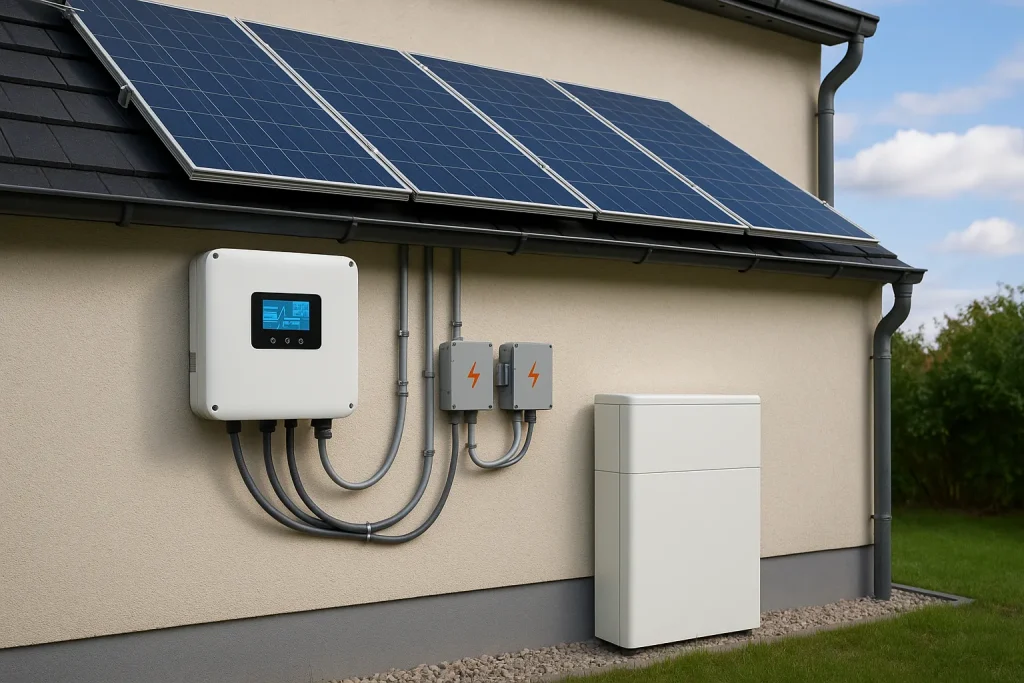
Green Additions helps homeowners get more value from their existing solar installations through customized battery storage solutions. If you already have solar panels on your roof, you might wonder whether you need to replace them to install a home battery. The good news is that, in most cases, you don’t.
You can often add a battery to an existing solar system without removing or replacing your current panels. A solar battery stores excess electricity generated during the day, allowing you to use that energy at night, during peak electricity hours, or when the utility grid goes down.
However, the process depends on your existing inverter, electrical equipment, system configuration, and energy requirements.
In this guide, we’ll explain how solar battery retrofits work, what equipment may need upgrading, how much installation can cost, and whether adding battery storage is the right decision for your home.
1. Can You Add a Battery to Existing Solar Panels?
Yes! Many residential solar systems can accommodate battery storage without requiring homeowners to replace their existing solar panels.
Your panels can continue generating electricity just as they did before. The battery is integrated into the existing electrical system to store surplus solar energy for later use.
For example, imagine your solar panels generate 30 kWh of electricity during a sunny day, while your home consumes 15 kWh during daylight hours. The remaining energy may be available to charge your battery, depending on system configuration and household demand.
Instead of exporting all that excess electricity to the utility grid, you can store some of it and use it when your panels aren’t producing enough power.
This approach is commonly known as a solar battery retrofit.
2. How Does a Solar Battery Retrofit Work?
A solar battery retrofit connects a new battery storage system to your existing solar installation.
The battery stores electricity when solar production exceeds household consumption and supplies stored energy when needed.
Here’s how the process typically works:
- Solar generation: Your existing panels generate electricity during daylight hours.
- Home consumption: Your appliances use the electricity produced by your solar system.
- Battery charging: Available excess electricity charges your battery.
- Energy storage: The battery stores electricity for later use.
- Battery discharge: Stored energy powers your home when solar production decreases.
- Grid backup: If your system includes appropriate backup equipment, the battery can supply selected household loads during a utility outage.
The exact operation depends on your battery technology, inverter configuration, and energy management settings.
This allows homeowners to upgrade their energy storage without starting their solar installation from scratch.
3. What Are the Different Ways to Add a Battery?
There are two common methods for integrating battery storage into an existing solar system.
AC-Coupled Battery System
An AC-coupled battery connects to your home’s electrical system separately from your existing solar inverter.
Your current solar inverter remains in place, meaning you generally don’t need to replace the equipment connected to your panels.
Benefits include:
- Keeps your existing solar inverter.
- Suitable for many solar battery retrofits.
- Offers flexibility when selecting battery storage.
- Can reduce the need for major system modifications.
This is often a practical choice for homeowners who want to upgrade an existing solar installation. Energy.gov.au+1
DC-Coupled Battery System
A DC-coupled battery connects to the solar system on the direct-current side, typically through a compatible hybrid inverter.
This configuration can offer better energy conversion efficiency because electricity may require fewer conversion steps.
However, an older solar inverter may need to be replaced with compatible equipment.
Benefits include:
- Efficient energy conversion.
- Integrated solar and battery management.
- Fewer separate components in some configurations.
The best option depends on your existing equipment, battery model, and installation requirements.
4. What Should You Check Before Installing a Solar Battery?
Although replacing solar panels is usually unnecessary, your existing system must be evaluated before adding storage.
An installer should inspect:
- Solar inverter: Determine whether your existing inverter supports the proposed battery configuration.
- Electrical panel: Check available capacity and whether modifications are required.
- Solar production: Confirm that your panels generate enough surplus electricity to charge the battery.
- Battery location: Identify a suitable installation area that meets manufacturer and local safety requirements.
- Electrical loads: Evaluate which appliances you want to operate during an outage.
- Utility requirements: Review applicable interconnection, metering, and tariff rules.
An older solar system may also need inverter repairs or other electrical upgrades. These requirements do not automatically mean your solar panels need replacement.
5. How Much Does It Cost to Add a Battery Without Replacing Solar Panels?
The cost depends on your battery choice, existing electrical equipment, and installation complexity.
Some homeowners only need a battery and associated control equipment. Others may require additional wiring, inverter modifications, or electrical panel upgrades.
Common cost factors include:
- Battery brand and storage capacity.
- Installation labor and electrical materials.
- Inverter compatibility.
- Backup Gateway or other control equipment.
- Permits and utility approval.
- Additional electrical modifications.
Keeping your existing solar panels can help avoid the expense of purchasing and installing an entirely new solar array.
For an accurate estimate, request a customized assessment based on your existing equipment and energy consumption.
6. Is Adding Battery Storage Worth It in California?
For many California homeowners, battery storage can make an existing solar system more useful.
Under California’s Net Billing Tariff, excess electricity exported to the grid generally receives compensation different from the retail electricity rate. Storing surplus solar energy for later household use can therefore improve energy management and potential bill savings.
Battery storage can help homeowners:
- Use more of their own solar electricity.
- Reduce reliance on grid electricity during expensive periods.
- Maintain power to selected appliances during outages.
- Manage electricity consumption more effectively.
- Prepare their homes for future energy needs.
However, homeowners with older NEM agreements should review their existing tariff conditions before installing storage. Adding a battery does not automatically mean losing NEM 2.0 eligibility, but applicable utility requirements must be followed. SCE
7. Why Choose Green Additions for Your Solar Battery Upgrade?
Adding battery storage is an opportunity to improve your existing solar investment without unnecessarily replacing equipment that still works.
At Green Additions, homeowners can explore customized battery storage solutions based on their existing solar panels, inverter compatibility, electricity consumption, and backup requirements.
Whether you’re considering a Tesla Powerwall, Enphase battery, or FranklinWH system, choosing the right configuration is essential for reliable performance.
A professional assessment helps identify the most practical upgrade while avoiding unnecessary equipment expenses.
Frequently Asked Questions (FAQs)
1. Can I add a battery to my existing solar panels?
Yes. Many existing solar systems can accommodate battery storage without replacing their panels. The installer must check inverter compatibility and electrical requirements.
2. Do I need to replace my solar inverter to add a battery?
Not always. An AC-coupled battery can often work alongside your existing inverter. However, some DC-coupled configurations require a compatible hybrid inverter.
3. Can I add a Tesla Powerwall to an older solar system?
Yes. Tesla Powerwall can be integrated with many existing solar systems. Compatibility, inverter configuration, and backup requirements must be evaluated before installation.
4. Will my existing solar panels charge the new battery?
Yes. When properly configured, your solar panels can generate electricity to charge the battery using available excess solar production.
5. Can I add a battery if my solar panels are several years old?
Yes. Older solar panels can often work with modern battery storage. However, their production levels, condition, and inverter compatibility should be assessed first.
6. Will adding a battery reduce my electricity bill?
It can. A battery allows you to store excess solar electricity and use it later instead of purchasing as much electricity from the grid. Actual savings depend on utility rates, energy usage, and battery settings.
7. Can a solar battery power my home during an outage?
Yes, if your battery system includes the necessary backup equipment. The available backup power depends on battery capacity, inverter output, and the appliances connected to the backup circuits.
8. How long does it take to install a battery on an existing solar system?
Many straightforward residential installations can be completed in one day. More complex projects involving electrical upgrades, permitting, or utility approvals may take longer.
Final Thoughts
You don’t necessarily need to replace your solar panels to enjoy the benefits of battery storage. In many cases, adding an AC-coupled or compatible DC-coupled battery is a practical way to upgrade your existing solar installation.
The key is choosing the right battery configuration for your inverter, electrical panel, energy consumption, and backup requirements.
Before making a decision, have your existing system professionally evaluated to identify compatibility issues and avoid unnecessary expenses.
Ready to upgrade your existing solar system with battery storage? Contact Green Additions to explore customized battery solutions for your home.
Green Additions – Making Your Existing Solar Investment Work Smarter.

