
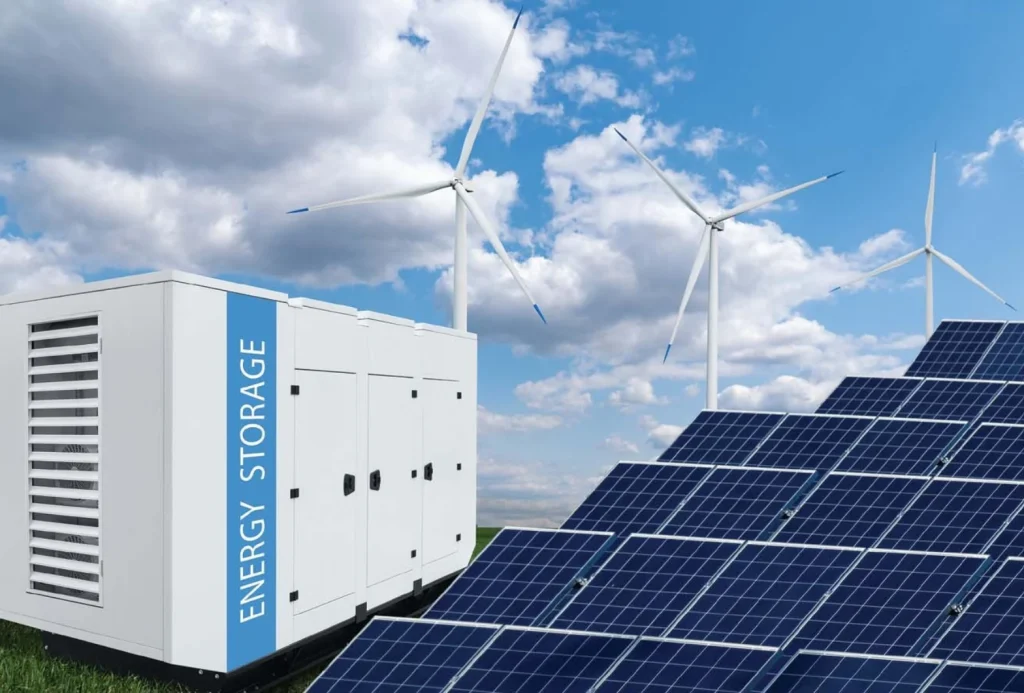
For solar and battery storage solutions that enable homeowners to gain energy independence, Green Additions offers a reliable way. One of the most common questions homeowners ask before installing a battery is: How long will it actually last during a power outage?
The answer depends on several factors, including battery capacity, household electricity consumption, appliance usage, and whether your solar panels can continue charging the battery.
A home battery might keep essential appliances running for several hours or provide backup power for more than a day. However, running high-energy appliances such as central air conditioning, electric water heaters, and EV chargers can drain stored energy much faster.
Understanding how battery backup works can help you choose the right system for your home and prepare for unexpected outages.
1. How Long Does a Home Battery Last During a Power Outage?
Most residential battery systems are designed to provide backup power for essential household appliances or, with sufficient capacity, larger portions of the home.
For example, a Tesla Powerwall 3 has approximately 13.5 kWh of usable energy capacity. Under suitable conditions, that stored energy can support essential household loads for an extended period. Actual backup time depends on how much electricity your home consumes.
Here is a simplified example:
| Average household consumption | Approximate backup time |
|---|---|
| 500 watts | 27 hours |
| 1,000 watts | 13.5 hours |
| 1,500 watts | 9 hours |
| 2,000 watts | 6.75 hours |
| 3,000 watts | 4.5 hours |
Illustrative estimates using 13.5 kWh of usable battery energy, before accounting for conversion losses, reserve settings, and other operating limitations.
The important thing to understand is that battery capacity alone does not determine backup duration. Your household’s electricity consumption makes a significant difference.
2. What Factors Affect Home Battery Backup Time?
Several factors determine how long your battery can keep your home running during an outage.
Battery Capacity
Battery capacity is the amount of energy a battery can store, measured in kilowatt-hours (kWh).
A larger battery generally provides longer backup time when household electricity consumption remains the same.
For example:
- A 10 kWh battery stores less energy than a 13.5 kWh battery.
- Two 13.5 kWh batteries provide approximately 27 kWh of combined nominal usable capacity.
- Three similar batteries provide approximately 40.5 kWh.
Actual usable energy depends on the specific battery model and its operating settings.
Household Electricity Consumption
Your home’s energy consumption is one of the biggest factors affecting battery duration.
A household running only essential appliances will generally have longer backup than a home operating air conditioning, electric cooking equipment, and multiple high-power devices.
For this reason, installers evaluate your electricity usage before recommending battery capacity.
Appliance Power Requirements
Different appliances consume different amounts of electricity.
For example:
| Appliance | Illustrative power consumption |
|---|---|
| LED lights | 10–15 watts each |
| Wi-Fi router | 10–20 watts |
| Refrigerator | 100–300 watts while running |
| Television | 50–150 watts |
| Laptop | 40–100 watts |
| Microwave | 1,000–1,500 watts |
| Central air conditioner | Varies widely; often several kW |
Actual consumption varies by appliance model, operating conditions, and startup requirements.
Battery Efficiency and Backup Settings
Not all stored energy is available to household appliances.
Battery systems have conversion losses, reserve settings, and operating limits. Some systems also retain a portion of their capacity for specific backup or battery-protection functions.
These factors should be considered when estimating real-world backup time.
3. Can Solar Panels Recharge a Battery During an Outage?
Yes! This is one of the biggest advantages of having a properly configured solar-plus-battery system.
Without battery backup equipment, most standard grid-connected solar systems automatically shut down during a power outage. This safety feature, called anti-islanding, prevents electricity from flowing back into utility lines while technicians may be working on them.
A properly designed solar-and-battery system can disconnect from the grid and operate independently.
During daylight hours:
- Your solar panels continue generating electricity.
- Your home uses the available solar energy.
- Excess production can recharge your battery.
- Stored electricity can power your home after sunset.
This means your battery may provide backup over multiple days, provided there is sufficient sunlight and you manage your electricity consumption.
However, not every battery installation supports solar charging during an outage. Make sure your installer designs the system specifically for backup operation.
4. How Long Will Different Home Battery Sizes Last?
Battery capacity makes a significant difference in backup duration.
Here are some examples using common residential battery capacities.
| Battery capacity | At 500 W usage | At 1,000 W usage |
|---|---|---|
| 10 kWh | 20 hours | 10 hours |
| 13.5 kWh | 27 hours | 13.5 hours |
| 15 kWh | 30 hours | 15 hours |
| 20 kWh | 40 hours | 20 hours |
| 27 kWh | 54 hours | 27 hours |
Illustrative calculations using nominal usable energy and constant consumption. Actual runtime will be lower where conversion losses, reserve settings, and system limitations apply.
For example, a Tesla Powerwall 3 provides 13.5 kWh of nominal battery energy. Two units provide approximately 27 kWh combined.
A larger battery capacity can provide longer backup, but the right system size depends on your home’s actual energy requirements.
5. Which Appliances Can a Home Battery Run During an Outage?
A properly sized home battery can operate many everyday appliances.
However, you should distinguish between essential loads and high-energy appliances.
Essential appliances
These generally require less electricity:
- LED lighting.
- Refrigerator.
- Wi-Fi router.
- Television.
- Laptop and phone chargers.
- Small household electronics.
High-energy appliances
These may consume a substantial portion of your stored electricity:
- Central air conditioning.
- Electric water heaters.
- Electric ovens.
- Clothes dryers.
- Pool pumps.
- EV chargers.
Whether a battery can operate these appliances depends on both its energy capacity (kWh) and its continuous and surge power output (kW).
For example, a battery may have enough stored energy to run an air conditioner for several hours but may not have sufficient instantaneous power to start it.
This is why professional load calculations are important.
6. How Can You Make Your Home Battery Last Longer?
If a power outage continues for several hours or days, managing your electricity consumption becomes essential.
Here are practical ways to extend battery backup time.
1. Prioritize essential appliances
Keep refrigerators, lighting, internet equipment, and essential medical devices running. Avoid unnecessary electrical loads.
2. Limit air conditioning
Air conditioners can consume significant amounts of electricity. Increase the thermostat setting or cool only the rooms you use when conditions allow.
3. Avoid running multiple high-power appliances
Using an oven, dryer, water heater, and air conditioner simultaneously can drain stored energy quickly.
4. Monitor your battery levels
Use your battery manufacturer’s monitoring application to track energy consumption, remaining capacity, and solar production.
5. Maintain a backup reserve
Configure an appropriate reserve level before an expected outage, where supported by your system.
6. Use solar production during daylight
When your system supports backup operation and solar charging during outages, schedule energy-intensive activities during sunny hours when practical.
These habits can help you get more value from your available battery capacity.
7. Should You Install One Battery or Multiple Batteries?
The right number of batteries depends on how much of your home you want to power during an outage.
One battery: Suitable for essential household appliances and moderate electricity consumption.
Two batteries: Better for larger homes, longer backup periods, and additional appliances.
Three or more batteries: Worth considering for homeowners who want extended backup, higher energy consumption coverage, or greater whole-home backup capacity.
For example, homeowners with central air conditioning, swimming pools, and electric vehicles may require additional storage capacity.
A professional installer can review your electricity bills and appliance requirements to recommend the right configuration.
Frequently Asked Questions (FAQs)
1. How long will a 13.5 kWh home battery last during an outage?
At an average consumption of 1 kW, a 13.5 kWh battery provides approximately 13.5 hours of theoretical backup. Actual runtime depends on system efficiency and household energy consumption.
2. Can a home battery last 24 hours during a power outage?
Yes. A battery can last 24 hours or longer if your household uses relatively little electricity. A properly configured solar system may also recharge the battery during daylight hours.
3. Can solar panels recharge batteries during a power outage?
Yes, provided your solar and battery system is designed to operate independently of the utility grid and supports solar charging during outages.
4. How many Tesla Powerwalls do I need to run my entire house?
It depends on your home’s electricity consumption, appliance requirements, and desired backup duration. One Powerwall may support essential loads, while larger homes may need multiple units.
5. Will my refrigerator work during a power outage with a home battery?
Yes. Most residential battery systems can support a refrigerator, provided it is connected to the backed-up electrical circuits and the battery has sufficient available power.
6. Can a home battery run central air conditioning?
Some home batteries can operate central air conditioning, but compatibility depends on the air conditioner’s power requirements, starting current, and battery output capacity.
7. Does a home battery automatically turn on during an outage?
Battery systems designed with appropriate backup equipment can automatically detect a grid outage, disconnect from the utility, and supply backup electricity.
8. What happens when a home battery runs out of power?
If the battery becomes fully discharged and solar panels cannot recharge it, the backup supply will stop. Your home will need the grid to return or another available power source.
Final Thoughts
A home battery can provide reliable electricity during a power outage, but how long it lasts depends on battery capacity, household consumption, appliance selection, and solar charging capability.
For some homeowners, one battery may provide enough energy for essential appliances overnight. Others may need multiple batteries to support larger homes and extended backup requirements.
The best approach is to evaluate your actual electricity usage and design a battery system around your household’s needs.
Want to know how long a home battery could power your house during an outage? Contact Green Additions for a customized solar and battery storage consultation.
Green Additions – Helping Homeowners Stay Powered, Prepared, and Energy Independent.

